Food hygiene courses come in three levels, and choosing the wrong one is a common mistake. Here is a simple way to decide.
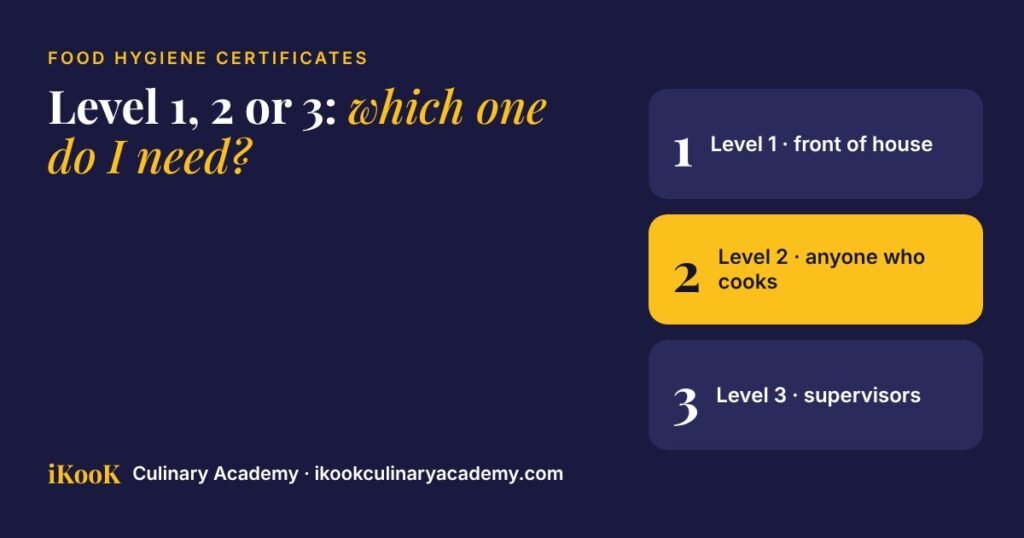
Level 1: for people who rarely touch open food
Level 1 covers the basics: personal hygiene, keeping work areas clean and the main food safety risks. It suits front-of-house staff, servers, bar staff, kitchen porters, delivery drivers and anyone handling mostly wrapped or low-risk food. It takes two to three hours.
Level 2: for anyone who cooks or prepares food
Level 2 is the one most people need. It’s the standard for chefs, cooks, caterers, kitchen assistants, food vendors, home bakers and private chefs. It covers bacteria and food poisoning, temperature control, cross-contamination, cleaning, pest control and allergens in more depth. Most employers and food inspectors expect food handlers to have Level 2. It takes about six and a half hours online.
Level 3: for supervisors, head chefs and owners
Level 3 is for people responsible for other people’s food safety: head chefs, sous chefs, kitchen supervisors, managers and owners. It adds food safety management systems based on HACCP, training and supervising staff, and handling inspections. If you run a catering business or a kitchen team, this is the level for you.
Quick guide
| Your role | Level |
|---|---|
| Server, bar, front-of-house, kitchen porter, delivery | Level 1 |
| Chef, cook, caterer, food vendor, home baker, private chef | Level 2 |
| Head chef, supervisor, manager, food business owner | Level 3 |
How long does a certificate last?
Food hygiene certificates don’t officially expire, but the industry recommends refresher training every three years, and many employers ask for a certificate that is less than three years old.
Still not sure? Our free Course Finder asks four quick questions and recommends the right course for your job, with the price in your currency.